November 9, 2026
Paintless Dent Repair (PDR) is both an art and a science. It requires technical knowledge, precision, and extensive hands-on practice to restore damaged vehicle panels without fillers, sanding, or repainting. As a repair method focused on preserving a vehicle's original factory finish, PDR demands a strong understanding of metal behavior, tool control, and damage assessment.
For aspiring technicians, structured paintless dent repair training provides the foundation needed to repair everything from everyday door dings to severe hail damage while developing skills that can lead to a rewarding career in the automotive industry.
Understanding the Foundations of Paintless Dent Repair
The History and Evolution of PDR
The roots of Paintless Dent Repair can be traced to automotive manufacturing facilities in Europe during the mid-20th century. Skilled technicians used specialized tools to remove minor imperfections from vehicle panels before assembly was completed.
Why PDR Has Become an Essential Trade
Modern PDR offers vehicle owners a faster and more cost-effective alternative to traditional body repair when paint damage is not present. By restoring metal panels rather than replacing or refinishing them, technicians can preserve the factory finish while avoiding many of the costs associated with fillers, paint booths, and extended repair cycles.
For technicians entering the field, PDR represents a growing career path supported by demand from:
- Hail damage restoration
- Dealership reconditioning programs
- Collision repair facilities
- Rental and fleet vehicle providers
- Mobile dent repair services
Mastering Core PDR Techniques
Reading Panels with Reflection Systems
One of the most important skills in PDR is learning how to read a damaged panel. Technicians use reflection boards or LED line boards that project patterns across the vehicle's surface. Distortions in those patterns reveal low areas, crowns, ridges, and other characteristics of the dent.
Blending and Crown Reduction
Successful repairs involve more than simply pushing dents out from behind a panel. Technicians also use knockdowns, blending hammers, and specialized tapping tools to reduce high spots and release tension around the damaged area. These techniques help create a smooth, uniform surface while preventing visible imperfections after the repair is complete.
Understanding the Tools Used in PDR
A professional PDR technician relies on a wide range of specialized equipment designed for different types of vehicle damage. Common tools include:
- Dent rods
- Whale tails
- Flat bars
- Knockdowns
- Blending hammers
- Glue-pulling systems
- LED line boards
- Reflection boards
- Panel lighting systems
Evaluating Vehicle Damage
Common Types of Dents
Every repair begins with a detailed assessment of the damage. According to Intent Market Research, Paintless Dent Repair (PDR) is ideal for addressing shallow dents (particularly those resulting from hail damage, door dings, and minor collisions), though it may not be effective for larger or more severe damage.
Technicians commonly encounter:
- Round Dings: Often caused by shopping carts, vehicle doors, or small hail impacts.
- Creases: Long, narrow dents that require careful repair sequencing and metal control.
- Pressure Dents: Larger dents caused by concentrated impacts that may affect broader areas of a panel.
- Hail Damage: Multiple impacts of varying depths that often require extensive restoration across the roof, hood, decklid, and side panels.
Understanding these damage types helps technicians determine the most effective repair strategy.
Interpreting Light Distortion
Rather than relying on measuring devices, PDR technicians evaluate damage by studying reflection patterns across the panel. Changes in line spacing, curvature, and distortion reveal valuable information about:
- Dent depth
- Metal stretch
- Crown formation
- Stress distribution
With experience, technicians learn to predict how metal will react before applying pressure, resulting in more efficient and consistent repairs.
Understanding Automotive Metal Properties
Steel vs. Aluminum Panels
Modern vehicles utilize a variety of materials, including:
- Mild steel
- High-strength steel (HSS)
- Ultra-high-strength steel (UHSS)
- Aluminum alloys
Each material responds differently during repairs. Aluminum panels are generally less forgiving than steel and require more precise tool control due to their increased stiffness and tendency to work-harden. As a result, technicians must adjust their repair techniques based on the specific material being repaired.
The Importance of Temperature
Environmental conditions can also influence repairs. Cold temperatures can reduce paint flexibility, increasing the risk of cracking during aggressive metal movement. Professional technicians often use panel warmers and temperature-monitoring practices to help maintain safe working conditions during repairs, particularly in colder climates.
Advanced Restoration Methods & Best Practices
Push-to-Paint Applications
Many collision repair facilities utilize a process known as push-to-paint. Rather than filling large dents with body filler, technicians first restore much of the damaged metal using PDR techniques. The panel can then be refinished with significantly less filler and preparation work. This approach helps reduce repair time, improve panel integrity, and create enhanced overall repair outcomes.
Knowing When PDR Is Not the Proper Option
While PDR is highly effective for many types of damage, every technician must understand its limitations. PDR may not be suitable when:
- Paint is cracked or missing
- Metal has been severely stretched
- Structural damage is present
- Tool access is restricted
- Extensive collision damage has occurred
Understanding these limitations helps technicians make informed repair recommendations and determine when traditional body repair methods are necessary.
Career Opportunities in Paintless Dent Repair
For many students, PDR offers more than a technical skill; it provides a pathway to long-term career opportunities. Graduates may pursue roles with:
- Independent PDR companies
- Collision repair facilities
- Automotive dealerships
- Fleet service providers
- Mobile dent repair operations
- Catastrophic hail repair teams
Many experienced technicians eventually establish their own businesses, allowing them to build a client base and operate independently. The combination of specialized skills, industry demand, and entrepreneurial opportunities makes PDR an attractive trade for motivated individuals.
Why Hands-On Training Matters
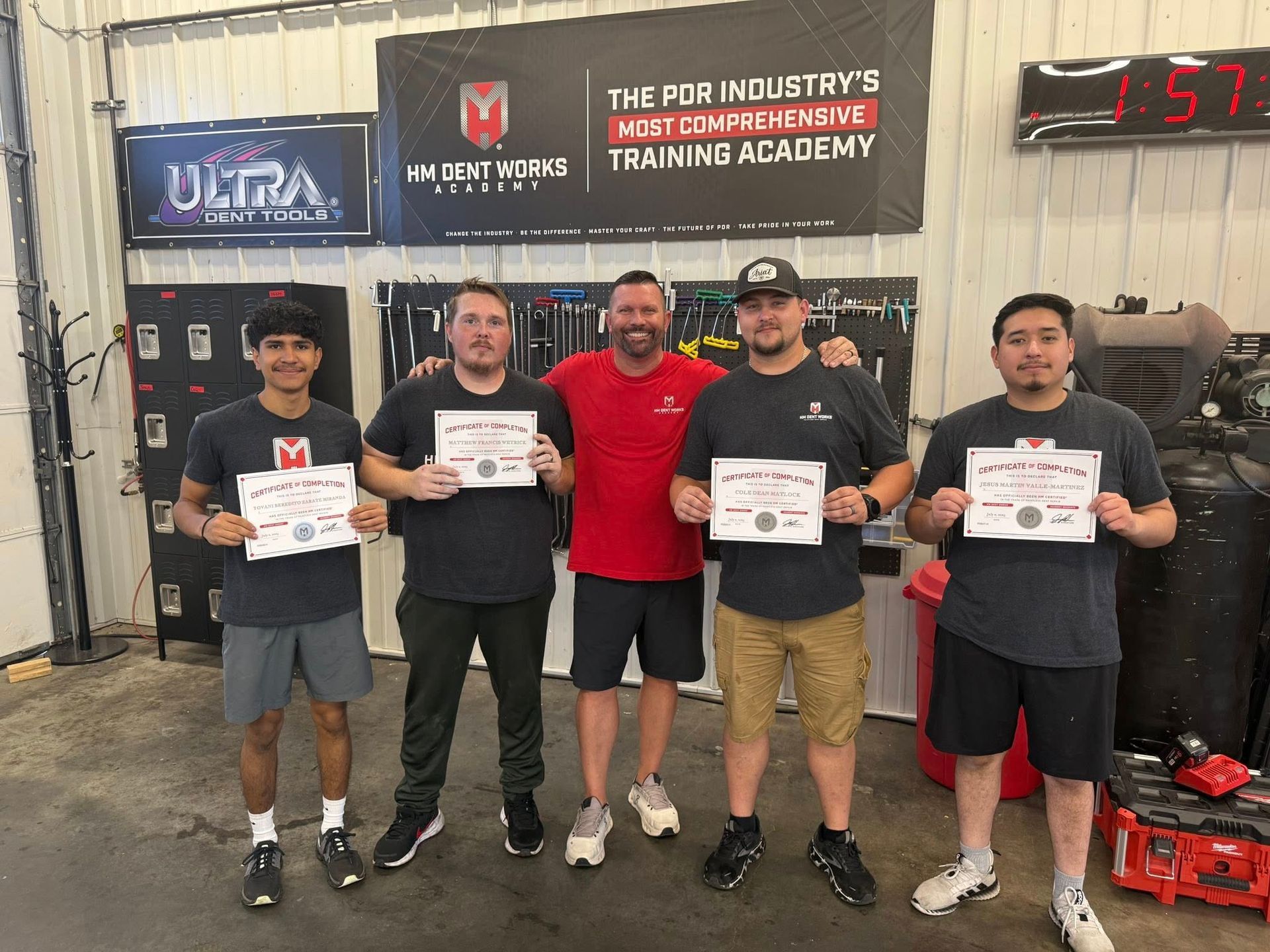
Unlike programs that rely primarily on classroom instruction, HM Dent Works Academy combines foundational education with practical training in a working repair environment. Students learn techniques used in real-world dent repair situations while gaining exposure to the workflows, tools, and expectations common throughout the industry.
Students benefit from:
- Training alongside experienced industry professionals
- Exposure to actual vehicle damage scenarios
- Instruction on both technical and business aspects of the trade
- Experience with hail repair, dent assessment, and estimating procedures
- A curriculum designed to prepare technicians for employment opportunities and independent business ownership
Frequently Asked Questions About Paintless Dent Repair Training
How long does paintless dent repair training take?
Training timelines vary depending on the program structure and a student's level of experience. Most students benefit from a combination of classroom instruction, hands-on practice, and real-world repair exposure to develop the control and consistency required for professional-level repairs.
Can beginners learn Paintless Dent Repair?
Yes. Many successful PDR technicians begin with little or no automotive repair experience. Professional training programs are designed to teach foundational skills such as tool control, damage assessment, metal movement, and panel reading from the ground up.
What tools are used in Paintless Dent Repair?
PDR technicians commonly use dent rods, whale tails, flat bars, knockdowns, blending hammers, glue-pulling systems, reflection boards, and LED lighting systems.
Is Paintless Dent Repair a viable career?
Paintless Dent Repair continues to be in demand among dealerships, collision repair facilities, fleet operators, hail restoration companies, and mobile repair businesses. Many technicians also pursue independent business ownership after gaining experience.
What types of damage can Paintless Dent Repair fix?
PDR is commonly used for:
- Door dings
- Minor collision damage
- Hail damage
- Creases
- Pressure dents
Repairability depends on paint condition, metal stretch, dent severity, and panel accessibility.
Can Paintless Dent Repair be used on aluminum panels?
Yes. PDR can be performed on aluminum panels, although aluminum behaves differently than steel and often requires more advanced techniques and greater precision.
Ready to take the next step? Book a Call to discuss upcoming training opportunities, career paths, and how Highline Pavement Solutions can help you enter the Paintless Dent Repair industry with confidence.